UNS S32750 holds a ferrite-to-austenite balance close to 50/50, which lifts the minimum yield strength to 550 MPa, roughly double that of 316L. Chromium between 24 and 26%, molybdenum from 3 to 5% and nitrogen up to 0.32% push the PREN past 40. Super duplex stainless steel UNS S32750 pipes resist chloride-induced pitting, crevice attack and stress corrosion cracking in seawater and sour service lines.

Silver Tubes supplies super duplex stainless steel S32750 pipes in seamless sizes from 1/2 inch NB to 8 inch NB and welded sizes from 6 inch NB to 24 inch NB. Outside diameters run from 6 mm to 630 mm, with wall thickness between 0.3 mm and 50 mm. Material ships against ASTM A790 and ASME SA790 in single random, double random and cut lengths. Domestic buyers and export markets across the Gulf, Europe and Southeast Asia prefer super duplex SS S32750 pipes alongside the wider super duplex steel products range.
The manufacturing route decides the pressure rating, diameter ceiling, and the delivered cost of an S32750 pipe. Three supply forms cover almost every piping requirement.
Hot extrusion followed by cold drawing produces a pipe with no weld line. Seamless sizes run from 1/2 inch NB to 8 inch NB, suiting high-pressure headers and cyclic-load service.
Rolled plate joined by ERW or EFW gives larger diameters at lower cost. Welded S32750 pipe covers 6 inch NB to 24 inch NB, with solution annealing restoring phase balance after welding.
Plate rolled and welded to drawing reaches diameters beyond standard mill ranges. Fabricators order these for spools, distribution headers and wall thickness combinations that no rolling schedule offers.
Refinery and offshore process lines below 8 inches usually use seamless pipe, where fatigue performance outweighs cost. Welded pipe dominates seawater headers, ballast circuits and firewater mains, as do Super Duplex UNS S32760 Pipes.
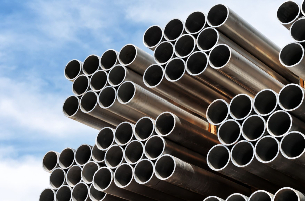
Seamless Pipes

Seamless Tubes

EFW Pipes

ERW Tubes

Welded Pipe

Welded Tubes
Dimensional and finish options for super duplex stainless steel S32750 pipes appear below, all held against ASTM A790 and ASME SA790 and available with matching super duplex steel pipe fittings.
| Parameter | Details |
| Grade | Super Duplex 2507 / DIN 1.4410 |
| UNS Number | S32750 |
| Standard | ASTM A790 / ASME SA790 |
| Pipe Type | Seamless, ERW, EFW, Welded, Fabricated, CDW |
| Size | 1/2" NB to 8" NB seamless, 6" NB to 24" NB welded, OD 6 mm to 630 mm |
| Schedule | SCH 5, SCH 10, SCH 40, SCH 80, SCH 80S, SCH 160, SCH XS, SCH XXS |
| Length | Single random, double random, cut lengths |
| End Type | Plain end, bevelled end, threaded |
| Surface Finish | Pickled, annealed, mill finish, polished |
Six characteristics separate this grade from conventional austenitic stainless steel and explain its use in chloride-bearing, high-pressure and sour service piping.
S32750 super duplex stainless steel provides higher mechanical strength and increased resistance to chloride-induced pitting and stress corrosion cracking compared to standard austenitic grades SS 304 and SS 316L.
| Parameter | SS 304 | SS 316L | S32750 |
| PREN | 18 to 20 | 24 to 26 | 42 to 43 |
| Minimum yield strength | 205 MPa | 170 MPa | 550 MPa |
| Chloride pitting resistance | Low | Moderate | CPT above 50 degrees C |
| Chloride SCC resistance | Poor | Limited | Strong to 300 degrees C |
| Molybdenum | None | 2 to 3 percent | 3 to 5 percent |
| Typical service | Utility water, food plants | Mild chemical, coastal air | Seawater, brine, sour service |
Chloride concentration, along with temperature, determines where 316L stops working. Past roughly 1000 ppm in a warm line, pitting starts under deposits, while the near-doubled yield strength of S32750 also permits thinner walls.
Every heat leaves the mill with records covering composition, mechanical performance and pressure integrity. Duplex grades need one more check than austenitic ones, since incorrect solution annealing shifts the ferrite-austenite ratio and erodes corrosion resistance long before service exposes the fault.
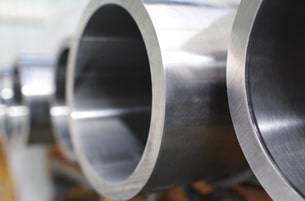
Silver Tubes is an ISO 9001:2015 certified manufacturer and exporter of pipes, fittings, flanges and sheets, based in Mumbai. Stock spans seamless, welded and fabricated S32750 in schedules from SCH 5 to SCH XXS. Each consignment carries EN 10204 3.1 or 3.2 certification with full heat traceability, third-party inspection on request, and cut lengths to drawing. Our team reviews line conditions and advises on schedule, end type and grade selection across the super duplex steel pipes range before order confirmation.
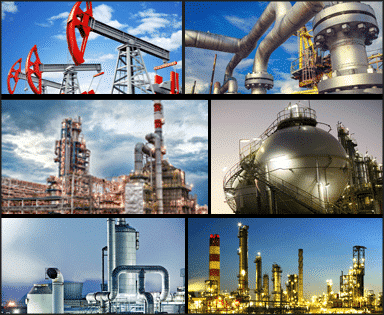
Ten industries account for most S32750 pipe consumption, and each one selects the grade for a specific corrosion or strength problem.

Sour crude gathering lines carry hydrogen sulphide and chlorides together. The 25% chromium content resists sulphide stress cracking, keeping downhole and topside piping serviceable far longer than 316L.
Firewater ring mains, ballast lines and seawater lift systems sit in the splash zone. A critical pitting temperature above 50 degrees C in ASTM G48 testing covers North Sea conditions comfortably.
Sulphuric and phosphoric acid circuits attack 316L quickly. Molybdenum between 3 and 5% slows general corrosion, letting operators run higher acid concentrations without moving to nickel alloys.
Cracker overhead lines and quench water circuits mix chlorides with temperature swings. S32750 piping handles up to 300 degrees C, above which ferrite embrittlement rules the grade out.
MSF and reverse osmosis plants pump brine at twice the seawater salinity. High-pressure feed piping in this grade avoids the crevice attack that ends 316L's service life early.
Shipboard cooling loops, ballast systems and fire mains draw untreated seawater. Chloride resistance keeps pitting off the bore, and 550 MPa yield strength allows thinner walls than austenitic piping.
Condenser cooling water lines and FGD absorber piping face chlorides alongside abrasive solids. The duplex structure resists erosion corrosion at bends where austenitic grades thin out first.
Exchanger piping carrying brackish or chlorinated cooling water suits this grade. Thermal conductivity runs higher than that of austenitic steel, and lower thermal expansion cuts stress at welded joints.
Bleach plants generate chlorine dioxide solutions at low pH. S32750 piping survives these circuits, reducing shutdowns across the washing, screening and bleaching stages of the mill.
Effluent headers moving chlorinated or brackish water gain from the pitting resistance. Municipal and industrial plants specify the grade for high-pressure mains and pump discharge lines.
Seawater piping, sour crude lines, desalination headers, bleach plant circuits and offshore firewater systems. Wherever chlorides and pressure combine, S32750 replaces 316L.
S32760 carries 0.5 to 1% tungsten and copper, lifting PREN marginally. Both grades meet ASTM A790, and mechanical properties stay close.
ASTM A790 and ASME SA790 govern seamless and welded supply. DIN 1.4410 and the 2507 designation describe the same chemistry.
Both, plus ERW, EFW and fabricated forms. Silver Tubes holds seamless up to 8 inch NB and welded up to 24 inch NB.
Outside diameters range from 6 mm to 630 mm, wall thickness 0.3 mm to 50 mm, in schedules from SCH 5 through SCH XXS.
Seawater chlorides pit 316L within a few years. The 25% chromium and 0.3% nitrogen in S32750 hold pitting and crevice attack off the bore.


 AN ISO 9001:2015 CERTIFIED
COMPANY
